26 February 2008

Floral inspiration for our shower mosaic

Cathy and I are considering lots of subject matter for the mosaic that we're going to do in our downstairs shower (we're remodeling the bathroom). Over the last few days it was trees, seasonal and not, and now we're on to flowers. Maybe that's what we'll do, maybe not. But here are a bunch of images that I clipped from the web:
clipped from us.st11.yimg.com
clipped from images.google.com
clipped from www.citifloral.net
clipped from images.google.com
 blog it

20 February 2008

Shape Wars

So, I was home sick yesterday. Pretty good fever, horrible head and joint pain, etc. We were afraid it was the flu, but it turned out to be a 24-hour thing. (Hooray!) Anyway, I woke up at 2 AM and needed stuff to do. I watched the Criterion Collection copy of Sparticus, worked on my PC and wrote up this game.

Shape Wars is a quick cardstock/paper game that you can print and cut out and be playing in just a few minutes if you have, and can print to, cardstock. It's way simpler than my original idea which was a cyberpunk permutation of Discwars but retains some of the core features. Download the PDF here.

It's good that I did this because I let my thing-a-day obligation slip Monday night while I mostly just shivered in bed.

09 February 2008

Rye

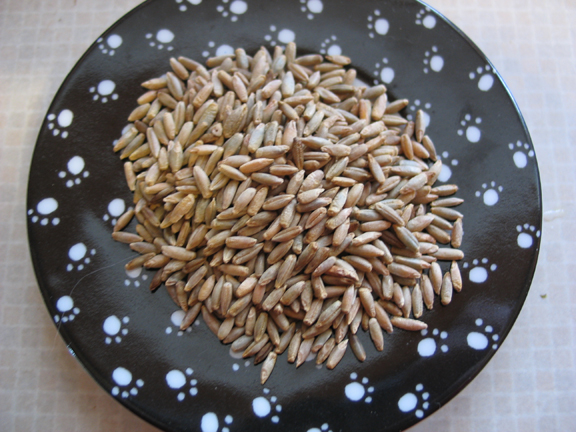
I've been making whole oat groats for breakfast lately. First we were making steel-cut oats for the increased nutritive and taste value. And I figured if less-processed = more nutrition, why not whole oats? So we mastered that and they're great! But what about other grains? We (everyone) make rice that way all the time, right? And it works for oats very nicely. So when I was buying a bag of oats out of the bulk section at my local natural foods coop, I noticed Rye right next "door." So I got some.

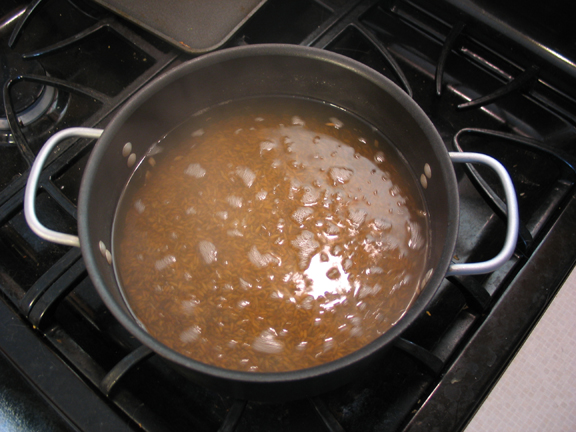
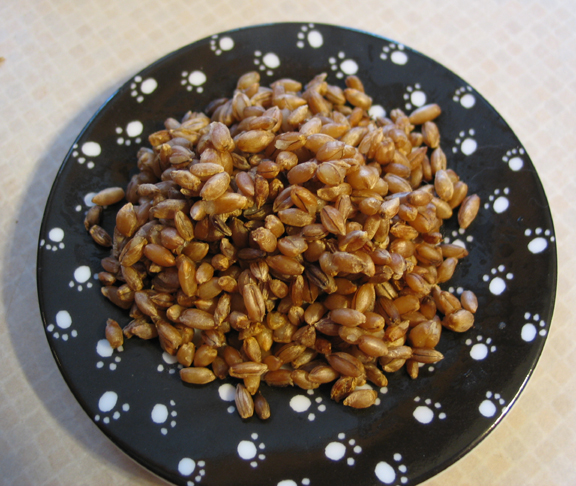
In the end it took over an hour and a half to simmer to the texture that I like and I used about 2 cups of rye...uh...groats(?) or kernels(?) or whatever and ten cups of water. But it's super good. More flavorful than oats or rice -- kind of nutty (and smells like bread), but the texture's not as nice. It was totally worth doing and I'll have it for breakfast in the morning, but I bet that I'll stick with oats in the end.

These three pictures show the rye before, during and after cooking. If you happen to be crazy-interested, click on any of them for blow-ups.

02 February 2008

Candlemaking

Today, the kids and I made some candles. This is something that I did once as a kid, possibly after reading about it in the McCall's Make-it Book or some kids' magazine. I melted wax and added crayons and them filled a tin can. Getting the can off was a bear. So this time, I'm an adult and proceed a little more thoughtfully. First, I got wicks at a Michaels store like six months ago -- I've been meaning to do this for a while. I knew that we'd need molds of some kind so I decided that trimmed toilet-paper rolls would be perfect for the three inch wicks that I had. Needing something on the bottom, Cathy suggested plastic-wrap. It worked!

Once the kids caught wind that I was thinking about candles, they were very interested in participating. So we got our respective crayon collections together and isolated a bunch of broken crayons that we could use. Just pawing through the crayons is kind of fun. :) Of course there had to be a little friction between Garrett and Kivi, but it wasn't bad.

Our execution of this project was pretty haphazard. I decided on the cardboard tubes long before figuring out what should go below. Cathy suggested the plastic-wrap and once it was rubber-banded in place, it was pretty good. Some wax did seep up under the bottom of each and was a hassle to trim up, but not bad. We melted the wax in star-shaped foil cupcake cups that were left over from Kivi's birthday. Half way through the project, Kivi decided she didn't want a pillar, she wanted to just make a star-shaped candle, so that's what we did for one of them.

Here are our four candles. Each one is different. The red one is the first one and had some red, gold and metallic red crayon in it. It's also the one that seeped out the bottom the most which accounts for the funny top shape. The blue one was Garrett's and the second one we did. He included blue and green crayons and they are quite evident when you look at the bottom of the candle. As mentioned, Kivi's candle is the star, which was our third. The bottom of that one is really nice -- deep colors and slick and shiny as glass. In response to our difficulty getting the crayons to melt enough that they were merging with the wax, but not so much that they just dispersed into it, I tried something different with the last one. I broke up a bunch of crayon scraps and layered them into the tall mold with the wick in place. Then, I dumped some wax that happened to have a bit of blue pigment from a previous melting in it all over the crayon pieces and filling up the tube. It's neat, but I wish the pieces had melted more.

Watercolored Paper

Right, so last night, I made up a batch of watercolor-tinted paper for collage and further paper-making projects. This idea stemmed from some accidental bleed-through that I got with watercolor markers on coffee filters and office paper and was reinforced by a section in Collage Unleashed by Traci Bautista that I ran across. All I used for this was household paper towels, Zig watercolor brush-markers and water. (Please note that using watercolor markers is probably the dumbest and most expensive way to do this -- squeezing a bit of tube watercolor -- though just a tiny bit, or painting from dry blocks would be more reasonable, but I was in a hurry...) Here's how I did it:

1) I allowed the watercolors to soak out of the brush-tips semi-randomly by wrapping the paper around and around the brush-tip and letting it sit with a weight (a bottle of gesso) on it for a few seconds or so. The towel paper is pretty efficient at sucking the pigment out of the pen so you don't want to leave it too long. You can see that I also added a blue line to one of the two sheets in a much more intentional effort. Also, for the two sheets that I worked on, I selected different pallets of pigment to use and the pens I chose for each are shown here with the "finished" sheets.

Once the pages were inked up, I wanted to transfer the pigment from sheet to sheet, spread it around on the sheets that I inked and also increase the number of sheets that I had to work with. There were places where the pigment was so heavy that it was obviously wet to the touch. To make this happen, I stacked two clean sheets of paper towel at the bottom, then one of the colored sheets, then three clean sheets, then the other colored sheet and finally two clean sheets at the top. Based on the results that you'll see below, I wish I'd placed more clean sheets, especially between the two.

At this point I moved from my paper-craft table downstairs to the kitchen counter upstairs since I'd be using water and leaving my work to dry under a ceiling fan. I wasn't sure about how (or how much) to wet the stack of towels but I was pretty sure that I didn't want to just run them under the faucet. I opted for a spray-bottle as the applicator. (And a pizza box to protect the counter -- but I should have put down newsprint instead of being lazy, now we have a bit of pink to our counter.)

I started out gingerly spritzing water onto the top. But a stack of nine paper towels is pretty absorbent and after going crazy with the sprayer for a while I discovered by pulling up a few sheets to look for saturation that it was all kind of floating at the top of the stack. This is what the top looked like after I was done with just spritzing the water. The problem with deciding that it needs more water is that the water-storage capacity of modern paper towels is astounding. Maybe I should have sprayed a bit on each towel as I layed them on the stack or something.

I ended up taking the lid of the sprayer and just pouring water onto the stack. And I got quite a bit too much, I think. I noted above that I wished I'd included more clean towels; that might still be good, but really, I should have used less water. Next time I'll pour it on more gradually and let it soak in before pouring the next bit on and try to reach a saturation without a soak. This is what the top looked like after I was done applying water.

So, once I had the stack soaking, I still noted that the migration of the pigments through the substrate was pretty minimal. And while there were some nice color combination blotchy areas, there was a bunch of plain white paper towel. As skeptical as one might be of using paper towels as an art medium anyway, plain white even makes me cringe. So I rolled the whole stack up thinking I could just knead the colors around -- which turned out to be correct.

The problem with kneading the colors around, at least in part, is that there was all that water trapped in the paper. When I squeezed, huge gushes of water would spill from the roll, carrying the pigment with it. You can see the mess that it was making below (but y'know, at least a mess of nicely colored paper towels is something I can use) where I was working. The real problem with all this water flow becomes evident when you note that after this step there is much less in the way of discrete color blotches. They've all bled together. Which is fine, but kind of less pretty than, especially, that first shot I took of the roll before I started squeezing. Again, less water next time.

So, after wringing the roll of towels out a bit, I unrolled them and picked them apart to spread and dry. All of the above-depicted work was done in half an hour on the evening of 01 Feb 2008 but these last two shots and some final drying are from the early morning of 02 Feb. You can see what I mean about the blotches bleeding together. I'm still not totally complaining about the effect, but more discrete colors might be nice too.

While I was flipping sheets and rearranging them so that they would dry more fully, I noticed lots of little details on many of the sheets. I wasn't really even looking for them, but even with (or maybe because of) the massive integration of the different pigments, a bunch of places where the colors did curious things formed. Of the few that I specifically noted, I particularly liked this one.

Games!